

Why Animals in Costa Rica Jungle Areas Make Every Day Unpredictable
The animals in costa rica jungle environments rarely appear on schedule. A howler monkey may call before breakfast. Scarlet macaws can cross overhead while travelers are watching the canopy. A sloth may remain above a trail for several minutes before anyone notices.
That unpredictability makes wildlife watching exciting.
Costa Rica contains rainforests, wetlands, mangroves, and mountain habitats that support remarkable biodiversity. Travelers who understand where animals move, when they become active, and how to observe them responsibly can enjoy more meaningful encounters.
Watching animals in costa rica requires patience. Slow down, listen carefully, scan different levels of vegetation, and allow the jungle to reveal what is already there. These habits improve the experience without disturbing wildlife.
The Jungle Is Easier to Hear Before You See It
Many animals in costa rica jungle habitats reveal their location through sound or movement.
Falling leaves may indicate feeding monkeys. Repeated calls can reveal toucans hidden among branches. A sudden splash beside a river may signal an iguana moving from its resting place.
The UNESCO Savegre Biosphere Reserve illustrates the biological richness of Costa Rica’s Central Pacific region, where forests, rivers, communities, and wildlife habitats exist across a diverse landscape.
Early mornings are productive because birds and mammals often become active before daytime temperatures rise. Late afternoons offer another useful observation period, while guided night walks introduce visitors to frogs and nocturnal wildlife.
Respectful observation matters. Maintain distance, secure food, avoid touching animals, and never surround wildlife for photographs. These habits help protect costa rica rainforest animals while allowing visitors to watch natural behavior.
Understanding when and where to look for jungle animals costa rica visitors hope to see can make a short forest walk much more rewarding.
9 Fascinating Animals in Costa Rica Jungle Habitats Worth Watching
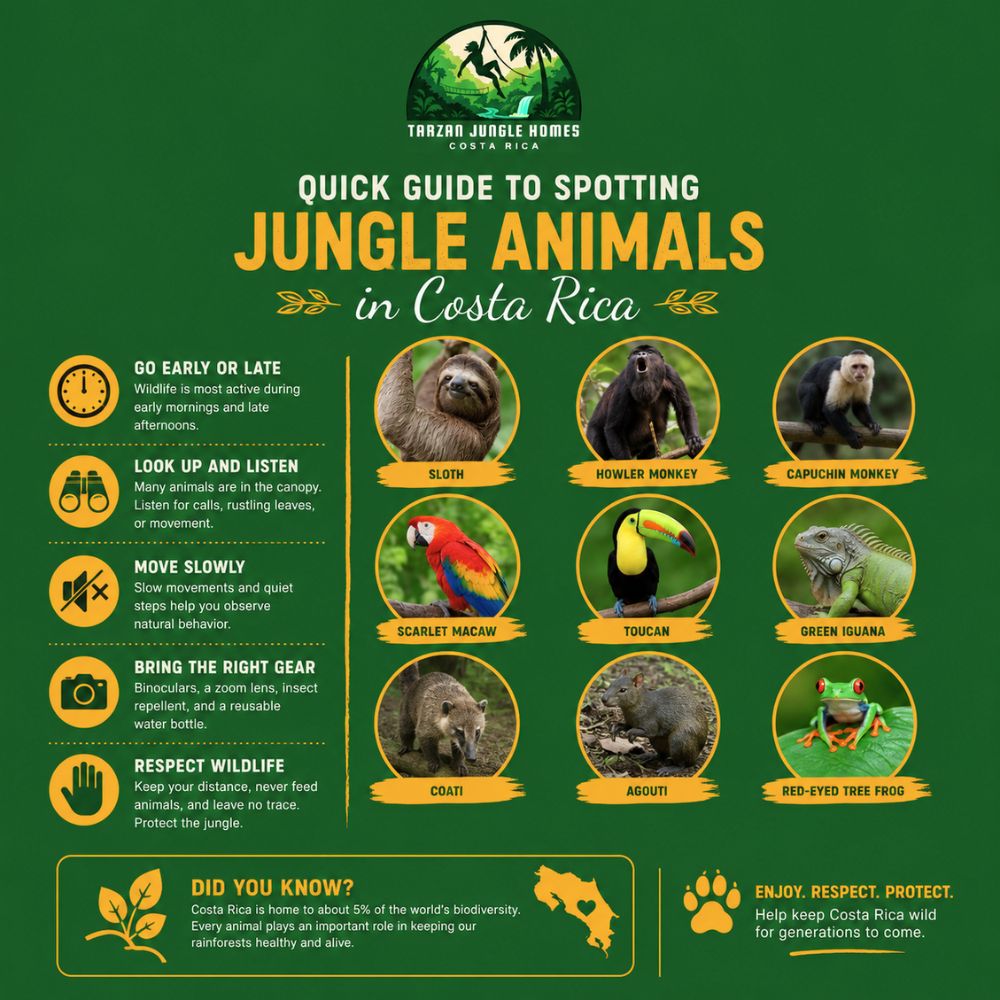
1. Three-Toed Sloths Reward Careful Observation
A three-toed sloth can spend hours in plain sight without being noticed.
Its slow movement and muted coat help it disappear among branches. Instead of searching for obvious activity, scan the canopy for rounded shapes, unusual shadows, or limbs hanging beneath leaves.
Among the many animals in costa rica, sloths demonstrate why patience can be more useful than covering long distances quickly.
2. Howler Monkeys Can Wake an Entire Forest
Few jungle sounds are as memorable as the deep calls of howler monkeys.
Their voices travel across forested landscapes, especially during early mornings. When calls begin, stop walking and watch the upper canopy.
Moving branches may reveal an entire group feeding, resting, or traveling between trees. Howler monkeys are among the costa rica rainforest animals travelers often hear before they see.
3. White-Faced Capuchins Are Clever Opportunists
White-faced capuchins are intelligent, active, and highly observant.
They search for fruit, insects, and other foods while traveling through forest environments. Their curiosity sometimes brings them close to areas used by people.
Never feed them. Keeping food and waste secured prevents monkeys from associating visitors with easy meals and supports natural behavior.
Watching these animals in costa rica jungle environments from a respectful distance provides a better opportunity to observe their social behavior.
4. Scarlet Macaws Make Looking Up Worthwhile
Scarlet macaws can transform an ordinary view of the canopy.
Their loud calls often arrive first. Seconds later, pairs or groups may cross the sky with flashes of red, yellow, and blue.
According to SINAC’s Carara National Park information, protected forests in Costa Rica’s Central Pacific region support extensive wildlife and plant diversity.
Find a comfortable observation point instead of following birds through the forest. Quiet watching can produce longer, less disruptive encounters with the jungle animals costa rica travelers came to experience.
5. Toucans Reward Travelers Who Watch Fruiting Trees
Toucans are among the most recognizable animals in costa rica for travelers interested in tropical wildlife.
Fruiting trees provide useful places to watch for activity. Spend several minutes observing one area rather than constantly changing locations.
A hidden toucan may eventually hop between branches or fly across an opening. Learning where birds feed can improve opportunities to watch animals in costa rica jungle settings without interrupting natural routines.
6. Green Iguanas Are Better Camouflaged Than Expected
Large green iguanas should be easy to notice, yet rainforest vegetation can hide them remarkably well.
They often rest along substantial branches near rivers, forest edges, and sunny openings.
Look horizontally across branches instead of focusing only on the ground. Use camera zoom and allow the animal to remain undisturbed.
Even large costa rica rainforest animals can disappear against dense vegetation when travelers move too quickly.
7. White-Nosed Coatis Keep the Forest Floor Busy
White-nosed coatis search leaves, soil, and fallen vegetation for insects, fruit, and other foods.
Their long noses and striped tails make them recognizable once spotted. Females and younger animals may travel socially, while adult males are often solitary.
Secure food carefully and observe natural foraging behavior from a respectful distance. Responsible observation protects the habits of jungle animals costa rica visitors encounter near forest trails.
8. Agoutis Quietly Support Forest Regeneration
Agoutis collect seeds, nuts, and fallen fruit. They sometimes bury food for later and fail to recover every seed.
Those forgotten food stores can germinate.
Watching these less-famous costa rica rainforest animals demonstrates how ordinary feeding behavior can influence forest regeneration and ecosystem health.
Agoutis also remind travelers that memorable encounters with animals in costa rica are not limited to famous species.
9. Red-Eyed Tree Frogs Make Nighttime Exploration Different
After sunset, the rainforest introduces another group of residents.
Red-eyed tree frogs become active around vegetation near water sources. Their green bodies and colorful markings make them popular wildlife subjects.
Guided night walks can help visitors locate small animals responsibly. Avoid handling frogs and allow trained guides to manage close encounters appropriately.
Nighttime observation reveals animals in costa rica jungle environments that travelers may never notice during daylight.
What to Check Before Choosing Your Jungle Base
Travelers researching where do tourists stay in costa rica should look beyond attractive photos when choosing accommodations.
When comparing safe places to stay in costa rica or the safest resorts in costa rica, consider practical operating conditions:
- ✓ Controlled access: At the Tarzan Jungle Homes, our four standalone jungle homes share one controlled access road.
- ✓ Only four private homes: Limited accommodations support quieter surroundings and a privacy-focused environment.
- ✓ Cul-de-sac positioning: Our setting reduces unnecessary through traffic and supports controlled surroundings.
- ✓ Live-in property manager next door: Guests have consistent on-site presence nearby throughout their stay.
- ✓ Nine years with zero crime incidents: We provide a measurable record rather than relying on general safety promises.
- ✓ Rainforest immersion: Guests can experience wildlife sounds, vegetation, and changing forest activity throughout the day.
- ✓ Peaceful recovery: Standalone homes provide space to rest between tours, park visits, and regional adventures.
Connected habitats also matter for wildlife. The Smithsonian eMammal biological corridor research project studies mammals across Costa Rican corridors using camera-trap surveys to understand wildlife activity across connected landscapes.
The safest place to stay in costa rica cannot be identified by one feature. Travelers should evaluate access, management presence, location, privacy, transportation planning, guest feedback, and surrounding conditions together.
At the Tarzan Jungle Homes, we combine structured operations with rainforest immersion so guests can remain close to nature while enjoying a private base between regional activities.
👉 Explore What Makes the Tarzan Jungle Homes a Private Jungle Base
Let Wildlife Become Part of Your Costa Rica Stay
Encounters with animals in costa rica jungle settings become memorable because they cannot be scheduled.
A monkey moving overhead, a toucan arriving during breakfast, or a frog discovered after sunset can change an ordinary moment. Learning about animals in costa rica also helps travelers understand why maintaining distance, securing food, and respecting habitat boundaries matter.
At the Tarzan Jungle Homes, we provide a private rainforest environment where guests can enjoy controlled surroundings and peaceful recovery between adventures.
For travelers researching the safest places to travel in costa rica, choosing a structured jungle base can support confidence while keeping nature close to everyday life.
Plan activities carefully, leave room for unexpected encounters, respect wildlife boundaries, and give yourself time to appreciate the costa rica rainforest animals that make the country memorable.
👉 Check Availability and Plan Your Stay at the Tarzan Jungle Homes
FAQs
1. Which Animals Can Visitors See in Costa Rica Jungle Areas?
Visitors may encounter sloths, monkeys, toucans, macaws, iguanas, coatis, agoutis, frogs, and other wildlife depending on habitat, season, and observation conditions.
2. When Is the Best Time to Observe Rainforest Wildlife?
Early mornings and late afternoons are productive observation periods. Guided night walks can reveal frogs, insects, and other nocturnal species hidden during daylight.
3. How Should Travelers Observe Jungle Wildlife Responsibly?
Maintain distance, never feed wild animals, secure food and waste, follow guide instructions, and avoid touching wildlife.
4. Can Guests See Wildlife Near the Tarzan Jungle Homes?
Our rainforest surroundings provide opportunities to notice birds and other wildlife, but sightings are natural events and cannot responsibly be guaranteed.
5. What Should Travelers Check Before Choosing a Jungle Stay?
Evaluate controlled access, management presence, privacy, location, transportation planning, guest feedback, surrounding conditions, and opportunities for peaceful recovery between activities.
